
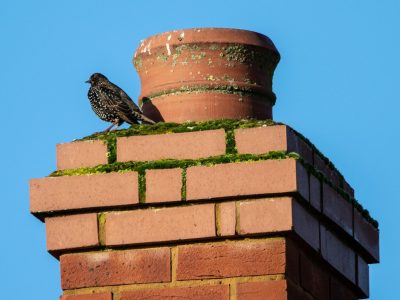
If you’ve ever heard strange noises coming from your chimney, there’s a good chance you’ve got some unexpected guests nesting inside. Birds like chimneys because they’re warm, sheltered, and provide protection against predators. Unfortunately, the feeling isn’t always mutual, and removing a nest can be complicated.
We offer chimney bird nest removal as a service, but we often have to explain to customers why we can’t always carry out the work immediately. More often than not, we’re legally obliged to say no – at least for a while. So, why is that?
Key takeaways
- Bird nests in the UK are protected by law under the Wildlife and Countryside Act.
- It is illegal to remove or disturb an active nest that contains eggs or chicks.
- Chimney professionals must refuse work if removal would break the law.
- Most chimney bird nest removal work is carried out safely outside of nesting season.
- Nesting season typically runs from March to September.
- Professional advice ensures you stay compliant while protecting wildlife.
Chimney Sweep Bird Removal: What You Need to Know

Why birds choose chimneys
From a bird’s perspective, your chimney is perfect. It’s sheltered, enclosed, and usually undisturbed. Where better to make a nest? The problem is that nests can quickly become a hazard.
They can:
- Block the flue and prevent proper ventilation
- Increase the risk of carbon monoxide entering your home
- Create a fire hazard if you’re using your fireplace
- Cause unpleasant smells and mess
So, it’s understandable that you may want the nest removed as soon as possible. But this is where legal considerations come into play.
Understanding the Wildlife and Countryside Act
In the UK, bird protection is governed by the Wildlife and Countryside Act 1981. This legislation makes it illegal to intentionally:
- Take, damage, or destroy the nest of any wild bird while it is in use or being built
- Take or destroy wild bird eggs
- Disturb certain species while they are nesting
This means that if a nest is active, containing eggs or chicks, it is protected by law. Removing it, even from your own property, could result in legal consequences. For you and for any chimney sweep who might be undertaking the work. This isn’t just guidance; it’s a strict legal boundary. No reputable company offering bird nest removal services will risk breaking these regulations, and rightly so.
What counts as an active nest?
One of the most common questions we get is, “How do you know if a nest is active?
”An active nest typically means one of the following:
- Birds are currently building it
- Eggs are present
- Chicks are inside
Even if you can’t see eggs or chicks directly, signs like regular bird activity, noise, or feeding behaviour can indicate that the nest is in use.
In these cases, chimney bird nest removal cannot legally go ahead.
Why we sometimes have to say no
If a nest is causing you problems – mess, bad smells, or stopping you from lighting your fire – waiting for removal can seem an unnecessary annoyance. But when we refuse a job, it’s not about convenience; it’s about staying within the law and acting responsibly.
Here’s why we might have to delay removal:
The nest contains eggs or chicks
This is the most straightforward reason. If there are eggs or young birds present, the nest is protected. Removing it would be illegal.
The nest is still in use
Even if there are no visible eggs, a nest that’s actively being used or built is still protected.
The timing falls within nesting season
Most birds nest between March and September, so if you have a nest in your chimney, that’s when it’s likely to be occupied. That’s why, unless it’s really obvious that it’s not going to be used for a while, we usually recommend waiting until the end of the season before carrying out chimney sweep bird removal.
What happens if you ignore the law?
Even if you’re OK with the ethics, if you attempt to remove a nest yourself during nesting season, you’re breaking the law. That can mean fines or prosecution. It can also mean that you’re not going to do a proper job.
Removing a nest incorrectly can:
- Leave debris further down the flue
- Injure birds or leave chicks trapped
- Just disturb the birds, rather than remove them
This is why it’s always best to seek professional advice before taking action.
When can bird nests be removed?
The good news is that bird nests can usually be removed safely and legally once they are no longer in use.
This typically means:
- After the chicks have fledged and left the nest
- When there is no ongoing bird activity
- Outside of peak nesting season (generally September to February)
At this point, chimney bird’s nest removal can be carried out without legal concerns. We can also clean the flue thoroughly and install preventative measures to stop birds returning.
Preventing future nesting problems
Once a nest has been removed, the next step is making sure it doesn’t happen again. Prevention is always easier (and cheaper) than dealing with repeat nesting.
Common solutions include:
- Installing a chimney cowl or bird guard
- Regular chimney inspections
- Annual sweeping to remove debris and blockages
A properly fitted cowl is one of the most effective ways to keep birds out while still allowing your chimney to function correctly.
The role of ethical chimney sweeps
If you’re searching for “bird nest removal services near me”, it’s important to choose a company that understands both the practical and legal aspects of the job.
At Webb & Son, we take this responsibility seriously. That means:
- Assessing every situation carefully before proceeding
- Refusing work when it would breach the law
- Offering clear, honest advice about your options
- Returning at the appropriate time to complete the job safely
It might not always be the answer customers want to hear in the moment, but it’s the right approach. Both for you and for the wildlife involved.
What to do if you suspect a nest in your chimney
If you think birds may have nested in your chimney, here’s what we recommend:
- Avoid using your fireplace until the situation is assessed
- Listen for signs of activity, such as chirping or movement
- Contact a professional for an inspection
- Be prepared to wait if the nest is active
Getting expert advice early can save you time, stress, and potential legal trouble.
If you have a bird nesting in your chimney right now, you won’t be alone. It happens regularly, across the UK. And it’s inconvenient, especially if they’re noisy or messy. But the Wildlife and Countryside Act is there for a reason. And any good chimney sweep will respect that.
Chimney sweep bird removal isn’t just about clearing a blockage; it’s about doing the job responsibly, legally, and with care. Sometimes that means waiting until the right time, even if it’s not the most convenient option.
If you’re dealing with a suspected nest or want advice on chimney bird nest removal, Webb & Son Chimney Sweep is always here to help. We’ll guide you through the process, ensure everything is handled correctly, and get your chimney back in safe working order when the time is right. Get in touch to find out more.
 What Happens During a Chimney CCTV Inspection Survey?
