
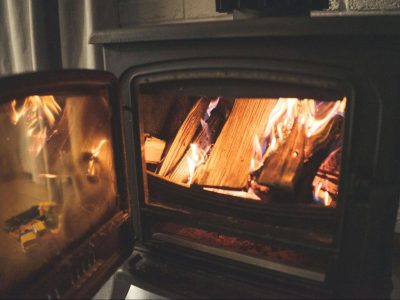
If you have an open fire or wood burner, it can be really tempting to gather your own firewood. Whether it’s fallen branches from the garden, timber from a DIY project, or wood found during a walk. But what many people don’t realise is that not all wood is suitable or safe to burn at home. In fact, using the wrong material can damage your fireplace, release harmful fumes into your home, or even cause a chimney fire. As chimney sweeps in Wolverhampton, we see people burning inappropriate materials all the time. But it really pays to know what you shouldn’t be burning in your home fire.
Key takeaways
- Only burn dry, untreated natural wood in your stove or fireplace.
- Seasoned hardwoods like oak provide the best heat and the cleanest burn.
- Softwoods such as pine can be burnt, but they must be properly dried.
- Never burn treated wood, painted timber, MDF, or construction waste.
- Pallets may only be burnt if they are confirmed untreated and heat-treated.
- Burning unsuitable materials increases creosote buildup and chimney fire risk.
- Regular inspections from a professional chimney sweep service help prevent dangerous deposits.
- Annual sweeping is recommended for most homes using wood burners in the UK.
What You Should and Shouldn’t Be Burning In Your Fireplace
Why the type of wood matters

Your log burner or open fire will always work best with fuel that burns hot, clean, and consistently. When the wrong material is burnt, it can produce too much smoke, tar, and soot, depending upon what the material is. Wet wood leaves thick tar deposits. Treated timber produces unusual residues and chemical smells. And when too much smoke is produced, creosote quickly forms in the flue. None of which is good for your chimney or your health.
Burning wood from your garden
If you have an open fire or wood burner, garden waste is an obvious fuel option. Fallen branches and pruned trees can be really useful, but only if properly prepared. Freshly cut wood contains a large amount of moisture, which means it produces a lot of smoke and not much heat when burnt.
So, if you want to burn your garden waste, you need to season it first. That simply means drying the wood out over time. The thing is that it takes a lot longer than most people realise; in the UK, most wood requires at least 12-24 months to dry properly. The aim is to reach a moisture content of less than 20%. You can find reasonably cheap moisture meters to check this.
Common garden woods that burn well when seasoned include:
- Apple
- Cherry
- Birch
- Ash
- Beech
These produce steady heat and relatively low smoke when fully dry.
Foraging wood locally

If you live near woodland areas, the chances are that you’ll occasionally come across fallen timber during walks. Removing this timber is often restricted on public land, particularly if there’s a conservation order in place. So, before you even think about using it for cheap firewood, it’s always best to do the following:
- Check local council guidance
- Only collect where it is legally permitted
- Take small amounts of naturally fallen wood
- Avoid cutting or damaging living trees
Pine: good or bad for wood burners?
Pine has a bit of a bad reputation among stove owners, but it’s not inherently bad. The problem is that pine is a softwood, which means it burns faster than hardwoods like oak or ash. It also contains natural resins that can produce more sparks and smoke if burnt when wet. So, it’s really important that you let it dry properly. When dry, pine can be useful for the following:
- Starting fires
- Quick bursts of heat
- Kindling
Because it burns quickly, it’s often best mixed with slower-burning hardwood logs.
The real issue with pine arises when green or damp pine is burnt. This produces excessive creosote, which increases the need for chimney cleaning services in the UK.
Oak: the gold standard firewood
If pine burns fast, oak does the opposite. Oak is a dense hardwood that produces long-lasting, steady heat. Once fully seasoned, it is one of the most efficient fuels for log burners. Benefits of burning oak include:
- Long burn times
- High heat output
- Less frequent refuelling
- Stable embers
The downside is that oak takes longer to season. And burning oak before it has fully seasoned can cause the same problems as burning any wet wood: smoke, soot, and heavy tar deposits in the chimney.
Get in touch with Webb & Son to book your Wolverhampton chimney sweep service today.
 Why Carbon Monoxide Is the Silent Killer for Your Chimney
